
Overview of the Manufacturing Industry
The manufacturing sector is the backbone of the global economy, driving innovation, employment, and industrial growth. It encompasses a wide range of activities, from traditional heavy industries such as steel and automotive to advanced sectors like electronics, aerospace, and medical devices. Efficient manufacturing requires integration of technology, skilled labor, and supply chain management to meet market demand while maintaining quality and cost-effectiveness.
Leading companies, including General Electric, Siemens, and Toyota, showcase advanced manufacturing practices that combine automation, digitalization, and lean methodologies to enhance productivity and competitiveness.
Modern Manufacturing Technologies
The adoption of modern technologies is transforming traditional manufacturing operations. Industry 4.0 emphasizes digital connectivity, automation, and data-driven decision-making. Smart factories leverage the Internet of Things (IoT), robotics, artificial intelligence (AI), and cloud computing to optimize production processes, reduce downtime, and enhance product quality.
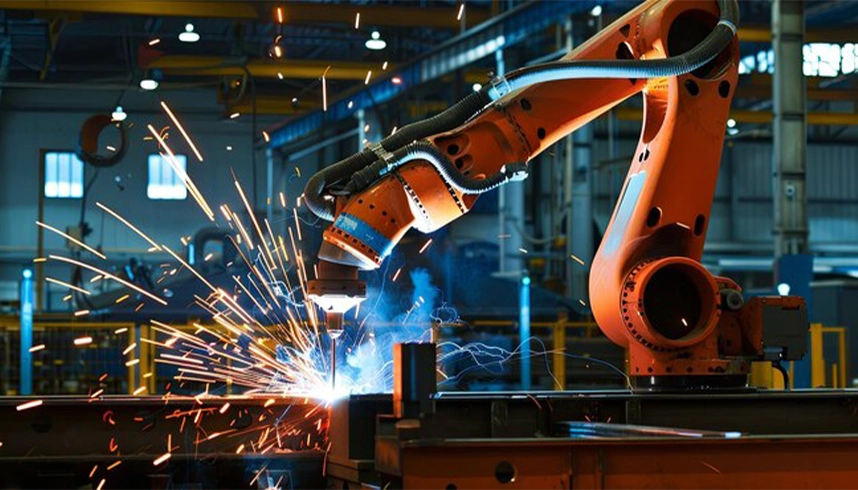
For example, robotic arms and automated assembly lines improve precision and efficiency in automotive and electronics manufacturing, while predictive maintenance powered by AI minimizes machine failures and production losses. Companies like FANUC and KUKA provide robotics and automation solutions to modern factories.
Supply Chain and Logistics
Manufacturing is tightly linked to complex global supply chains. Efficient procurement of raw materials, timely production, and seamless distribution are crucial for competitiveness. Digital supply chain platforms enable real-time inventory tracking, demand forecasting, and supplier collaboration, minimizing bottlenecks and reducing costs.
Companies such as SAP and Oracle provide enterprise resource planning (ERP) and supply chain management systems to streamline operations. Integration of AI and data analytics further enhances decision-making, ensuring agile responses to market fluctuations.
Quality Control and Standards
Quality assurance is a critical component of manufacturing. Implementing international standards such as ISO 9001 ensures consistency, safety, and customer satisfaction. Advanced techniques, including real-time monitoring, non-destructive testing, and AI-driven defect detection, are widely used in high-precision industries like aerospace, pharmaceuticals, and electronics.
Companies are increasingly adopting digital twins to simulate production processes, optimize designs, and predict quality issues before physical manufacturing begins. This approach reduces waste, increases efficiency, and improves overall product reliability.
Environmental and Sustainability Practices
Sustainability has become a central concern for the manufacturing sector. Companies are adopting energy-efficient production methods, reducing emissions, recycling materials, and using environmentally friendly raw materials.
Initiatives such as circular economy strategies and waste minimization are being implemented across industries to reduce environmental impact. Organizations like the International Energy Agency and United Nations Sustainable Development Goals provide guidance and frameworks to support sustainable manufacturing practices.
Challenges and Opportunities
Manufacturing faces several challenges, including labor shortages, supply chain disruptions, rising energy costs, and technological complexity. Companies must invest in workforce development, digital tools, and innovation to maintain competitiveness.
At the same time, opportunities arise from advanced manufacturing, automation, 3D printing, and smart materials. Adoption of these technologies allows businesses to produce complex products faster, reduce costs, and meet the growing demand for customization.
Global Trends and Future Outlook
The future of manufacturing is heavily influenced by digitalization, sustainability, and global connectivity. Key trends include:
Smart factories and Industry 4.0 integration.
Adoption of additive manufacturing (3D printing) for rapid prototyping and production.
Use of AI and big data for predictive analytics and process optimization.
Green manufacturing initiatives to meet environmental regulations.
Enhanced collaboration between suppliers, manufacturers, and end-users.
Manufacturers that embrace these trends will maintain a competitive edge in a rapidly evolving global market.
Internal & External Links
For related insights, visit our Power Generation page and Petrochemical & Refining page. External resources include Manufacturing.net for news and trends and MHI for industry resources and solutions.
Industry Overview
Applications & Use Cases
Process Automation
Automate production lines for efficiency and consistency.
Water Treatment Solutions
Ensure clean and safe water for industrial use.
Streamlining Manufacturing Processes
Integrated automation and chemical solutions reduced downtime by 15%.
Key Results:
- 15% reduced downtime
- Improved production output
Need a Custom Solution?
Our experts are ready to design the perfect solution for your Manufacturing operations.
Get in Touch